Best College Dorms in America 2026: Top Schools Ranked
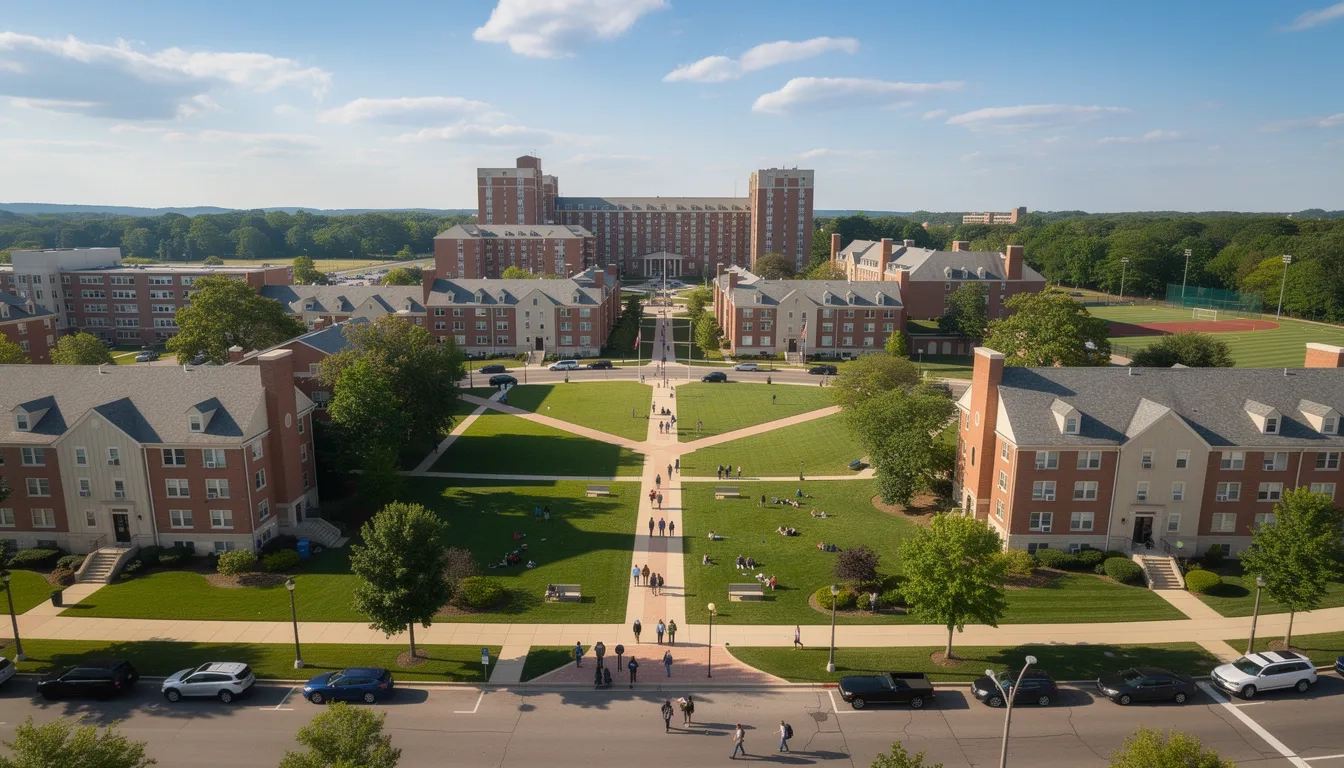
Somewhere between 2010 and today, the college dorm stopped being a punchline. We went from cinderblock walls and communal bathrooms to Tempur-Pedic mattresses, LEED-certified buildings, and a brand-new $95 million residential complex at High Point University that looks more like a boutique hotel than student housing. If you're trying to figure out where you'll actually live for four years, the stakes are higher than the brochures let on.
How These Rankings Actually Work
The main authority here is Princeton Review's annual "Best College Dorms" list. The 2026 edition surveyed 170,000 students across 391 colleges (roughly 435 per campus), asking them to rate their own housing. You're not reading a journalist's two-hour campus tour impressions. You're reading what people who actually sleep there think.
Niche.com runs a parallel ranking, blending student reviews with Department of Education data. Where both sources agree, you can feel confident about a school's housing reputation. Where they diverge, the Princeton Review tends to carry more weight since it pulls entirely from student-gathered opinion.
What both rankings do well: They reflect current conditions, not decade-old dorm legends. A school that renovated its residence halls three years ago will score better now than it would under its old reputation.
#1: Washington University in St. Louis
WashU claimed the top spot in Princeton Review's 2026 Best College Dorms ranking. The South 40 residential area (named for the 40-acre plot it sits on) operates like a self-contained neighborhood, with dining, fitness, a tech center, and student meeting rooms all within a short walk of any dorm room.
The rooms set a high bar. Suite-style housing groups four to six students around shared private bathrooms. Tempur-Pedic memory foam mattresses come standard. According to WashU Vice Chancellor Dr. Anna Gonzalez, the design goal is creating "supportive communities where students receive wraparound support" — and the physical layout backs that up, with spaces that make studying and socializing feel natural rather than forced.
WashU also topped Quality of Life rankings in 2026, placing in the top 10 for friendliest students, most beautiful campus, and best dining. That's not a coincidence. When housing works, everything downstream tends to work better.
High Point University: The Resort That's Also a College
High Point University in North Carolina enrolls about 6,400 undergraduates and isn't widely known outside the Southeast. It consistently tops both Princeton Review and Niche for best dorms, and in spring 2026, it opened Panther Commons — a $95 million residential complex for upperclassmen and graduate students.
Panther Commons is hard to describe as a dorm with a straight face. Full-size beds, mini-kitchens with full-size refrigerators and microwaves, private bathrooms with glass shower doors and circular vanity mirrors, outdoor terraces, a fitness center, and music practice rooms. That's a mid-range apartment building that happens to sit on a college campus.
What makes HPU unusual is that Panther Commons is just the latest addition to a model that already includes traditional dorms, apartment-style housing, and tiny homes (which are exactly what they sound like: compact freestanding units on campus). Aldridge Village offers a pool, basketball court, volleyball court, and on-site dining. Students and parents who call the HPU campus "resort-like" aren't exaggerating.
The Residential College Model: Rice and Yale
Some schools don't just build nicer dorms. They build complete social communities around housing. Rice University and Yale are the clearest examples in America.
Rice divides its roughly 4,200 undergraduates across 11 residential colleges. Each has its own identity, traditions, dining hall, common rooms, study spaces, and student government. When you arrive as a first-year, you're assigned to a college, and that placement shapes much of your social life for four years. Duncan College has a movie room and creative innovation space. Lovett College hosts the annual "Sunfest" music festival on its 2nd-floor sundeck. Room and board runs $18,100 per year (2024-25 academic year), and the newest colleges include daily janitorial cleaning along with private bathrooms.
Yale operates a similar model with 14 residential colleges: Gothic architecture, fireplaces in common rooms, bay windows, hardwood floors. Niche gives Yale an A+ for dorms — not because the rooms are enormous, but because the residential structure creates genuine belonging.
The residential college model works because you're not just choosing a building. You're choosing a community structure. Schools that get this right consistently rank higher on student satisfaction across the board, not just on housing surveys.
This is, I'd argue, the most underappreciated distinction in college housing. A well-designed social system is harder to replicate than a nice mattress, and it compounds over four years in ways that single amenities simply can't.
Four More Schools Worth Knowing
Texas Christian University ranked #6 nationally for dorms in the Princeton Review 2026 list and #1 for happiest students. Free laundry in every hall, wood vinyl floors, XL full-size beds, mini-fridges, and in-suite bathrooms for upperclassmen. TCU's housing isn't flashy, but it's consistent across buildings — which matters more than you'd think after six months of daily use.
MIT's Simmons Hall takes a completely different path. Designed by architect Steven Holl, the building features a ball pit, projection screen lounges, and what multiple food publications have called one of the stronger campus dining halls in the country. MIT treats housing as a design problem (the exterior's sponge-like structure is actually functional, not decorative), and most students come around to appreciating it even if they don't at first.
Florida Gulf Coast University's North Lake Village is the most under-discussed option in this category. Resort-style pools, fire pits, beach volleyball courts, game rooms, and a movie theater — all at a price well below what most comparable private schools charge. For the amenity-per-dollar calculation, FGCU is nearly impossible to beat.
Emory University's Raoul Hall is LEED Gold certified, offering co-ed and single-gender floors, student lounges, cable TV, and WiFi. For students who want sustainable housing without sacrificing comfort, this is the strongest option among major research universities.
What You're Actually Paying
Most ranking lists skip this part. Being ranked #1 doesn't make an experience accessible at every budget. Here's where the major schools land:
| School | Annual Cost (approx.) | What Stands Out |
|---|---|---|
| NYU | $25,516 (room + board) | 22 buildings across Manhattan |
| Rice University | $18,100 (room + board) | 11 residential colleges, daily cleaning |
| Washington University in St. Louis | $13,970–$15,762 (room only) | Suite-style, Tempur-Pedic beds |
| Texas Christian University | ~$14,000–$16,000 | Free laundry, in-suite baths for upperclassmen |
| University of Utah | $11,606–$12,770 (room only) | Gender-inclusive options, communal kitchen access |
| University of Arizona | $7,090–$8,380 (room only) | 23 halls, pool access at Babcock Hall |
| East Carolina University | $5,916 | Most affordable with above-average amenities |
NYU's number reflects Manhattan real estate as much as dorm quality. But Arizona's and FGCU's figures show that strong amenities aren't reserved for $60,000-per-year private schools. The gap between top public and top private dorm quality has narrowed considerably in the past decade.
What to Actually Look For
Rankings are a starting point. Here's a practical framework for making the decision yourself:
If you want community from day one: Prioritize schools with residential college systems — Rice, Yale, Harvard, Bowdoin. You're assigned to a smaller group before orientation, which helps introverts especially. You show up already belonging somewhere.
If privacy is non-negotiable: Suite-style housing matters more than room square footage. WashU, TCU, High Point, and Union University all offer private or semi-private bathrooms for most students.
If budget drives the decision: FGCU, Kansas State, University of Arizona, and East Carolina all offer above-average amenities at in-state prices. The proof is in the pudding — FGCU holds an A+ Niche rating despite costing far less than its private-school peers.
If sustainability is part of your criteria: Emory's Raoul Hall and Pomona College's Dialynas and Sontag Halls (which feature rooftop gardens) lead in this area.
A few things even good rankings don't capture:
- Noise levels and quiet-hours enforcement — ask current students, not admissions staff or tour guides
- HVAC reliability in older buildings — Yale's Gothic dorms are beautiful but can run warm in early September
- Roommate matching quality — some schools use detailed compatibility surveys; others assign randomly
One practical question worth asking any school: "What percentage of upperclassmen voluntarily choose to live on campus?" High numbers mean people are staying by choice, not requirement.
Bottom Line
The best college dorms in America in 2026 aren't about bigger rooms or fancier furniture. They're about designed communities. Washington University in St. Louis earned its #1 ranking by combining premium housing with a residential model built around student wellbeing. High Point University shows that a smaller school can compete by going all-in on the living experience. Rice and Yale prove that a residential college system (real community structure, not just shared hallways) still outperforms raw square footage in long-term student satisfaction.
What to do with this:
- Check whether a school uses suite-style or corridor-style housing before visiting. This single variable determines your day-to-day privacy more than anything else.
- Ask admissions: "What percentage of upperclassmen voluntarily live on campus?" High numbers signal that students choose to stay.
- Don't overlook FGCU, Kansas State, and University of Arizona if budget matters — all three deliver above-average amenities at public school prices.
- Visit during a regular school week, not a scheduled tour event. Walk the dorms unaccompanied if the school allows it.
Frequently Asked Questions
Which college has the #1 dorm ranking in America for 2026?
Washington University in St. Louis ranked #1 in Princeton Review's 2026 "Best College Dorms" list, based on surveys of 170,000 students at 391 colleges. WashU's South 40 residential area combines suite-style housing, Tempur-Pedic mattresses, and on-site dining, fitness, and tech facilities within a single walkable neighborhood.
Do more expensive dorms mean better quality?
Not necessarily. Florida Gulf Coast University's North Lake Village includes resort-style pools, fire pits, volleyball courts, game rooms, and a movie theater at a fraction of NYU's $25,516 annual room and board cost. State school housing has closed the amenity gap with private schools considerably over the past decade.
What's the difference between suite-style and residential college dorms?
Suite-style dorms group students into shared units with private or semi-private bathrooms, but without an academic or social community structure built around them. Residential colleges at Rice, Yale, and Harvard go further: each student belongs to a named college with its own culture, dining, student government, and traditions. Most students who go through a residential college system say it defined their college years more than any other single factor.
Do freshmen always get the worst dorms?
This is a common misconception that many schools have deliberately reversed. Harvard places all first-years in Harvard Yard, its most iconic residential setting. Bowdoin dedicates eight residence halls specifically to incoming students before they enter the lottery system. At WashU, all undergraduates share access to the South 40 community regardless of class year.
What amenities should I prioritize when evaluating dorms?
Private or semi-private bathrooms and reliable climate control matter more day-to-day than occasional-use features like pools or movie theaters. Once the basics are solid, focus on study rooms, kitchen access, and gathering spaces — these have more impact on daily life than headline amenities.
Is on-campus housing worth the cost compared to renting off campus?
At schools with strong residential communities — Rice, Yale, WashU, Bowdoin — on-campus housing usually wins for the first two years. Community access and campus proximity are hard to replicate in an off-campus apartment. After sophomore year, the math often shifts toward cost and independence, especially at schools in cities with reasonable rental markets.
Sources
- The Princeton Review's Best Colleges for 2026 Rankings Are Out
- WashU tops national rankings for residence halls and quality of life
- 10 Best College Dorms in America 2026
- 2025's Best College Dorms & How To Find the Best Fit
- 10 Colleges with the Best Dorms
- Best Dorms in the Nation — High Point University
- Residential Colleges — Rice University