Best Colleges in Colorado 2026: Rankings, Costs, and How to Choose
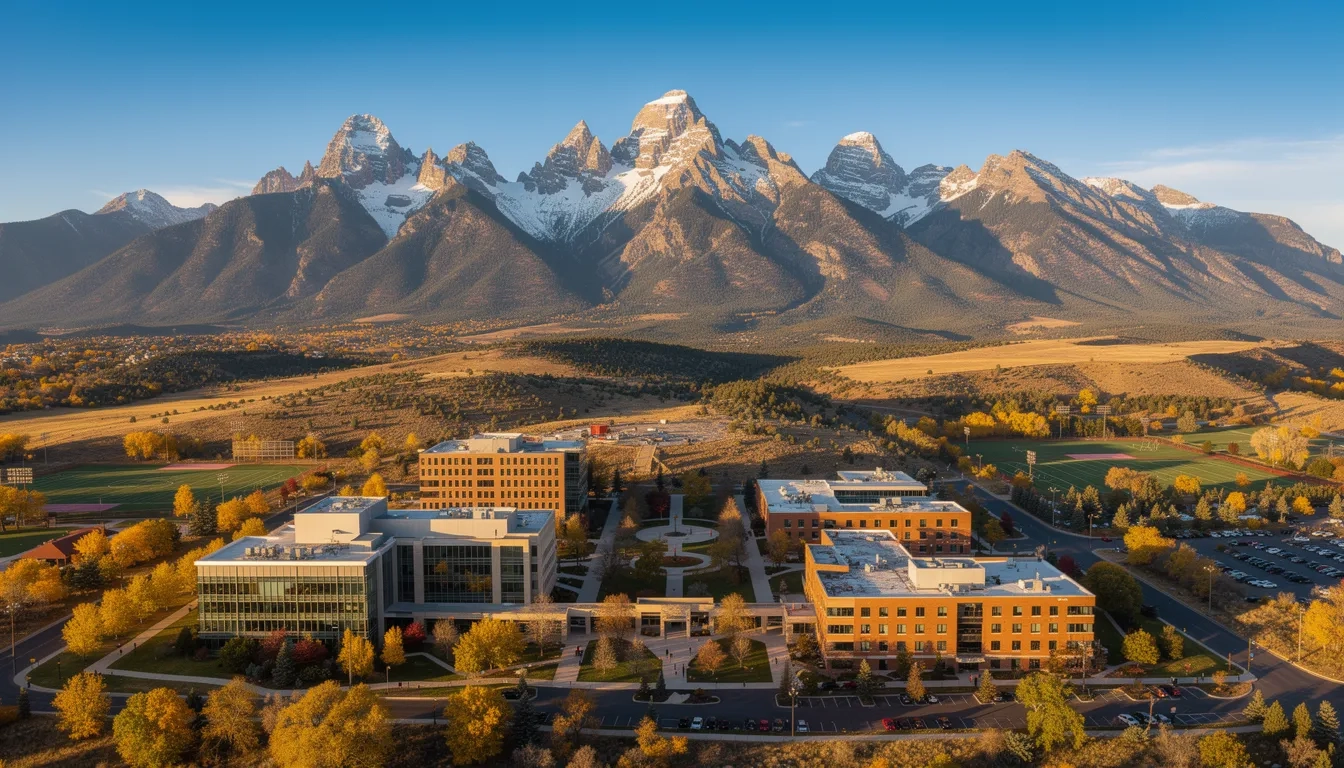
When people build their college shortlists, Massachusetts and California hog the spotlight. Colorado barely registers — which is strange, because the state has a technical university whose graduates earn a median starting salary of $95,600, a liberal arts college with a lower acceptance rate than Dartmouth, and a flagship public school that just broke into the national top 100 for the first time. The 2026 rankings are out. Here is what they actually tell you, and what they don't.
The 2026 Rankings: What Colorado Gets Right
Colorado now holds two spots in the U.S. News & World Report national top 100: Colorado School of Mines at #80 and the University of Colorado Boulder at #97. The University of Denver, competing as a private national university, lands at #76. Colorado State University comes in at #151.
Three schools in the national top 200, two in the top 100 simultaneously. It's not a fluke. Research partnerships with federal agencies along the Front Range and an influx of tech and energy firms into the Denver metro area have been building this for a decade.
Here's a fast comparison of the main players:
| School | US News 2026 | In-State Tuition | Acceptance Rate | Avg Starting Salary |
|---|---|---|---|---|
| University of Denver | #76 (National) | ~$61,400 | 61% | $65,400 |
| Colorado School of Mines | #80 (National) | $19,300 | 43% | $95,600 |
| CU Boulder | #97 (National) | $14,002 | 81% | $59,700 |
| Colorado State University | #151 (National) | $12,500 | 81% | $53,400 |
| Colorado College | Liberal Arts tier | ~$63,000 | 13% | $49,900 |
| Metro State Denver | — | $7,900 | 85% | — |
Salary data from Academic Influence's 2026 analysis of graduate outcomes.
Colorado School of Mines: Engineering Value That's Hard to Match
Set in Golden, CO — a compact city between Denver and the first rise of the Foothills — Mines enrolls roughly 6,000 undergraduates and operates with a single organizing purpose: engineering and applied sciences centered on energy, earth, and environmental systems.
That focus produces measurable results. The $95,600 average starting salary is the highest of any Colorado school in the top 10, and it's not driven by one outlier program. Petroleum engineers, computer scientists, and metallurgical engineers walk directly into industries that helped design the curriculum. Department of Energy labs, renewable energy startups, and oil and gas firms recruit on campus specifically because they've been working with Mines faculty for years.
The acceptance rate sits at 43%, making it meaningfully selective among Colorado public schools. The academic culture is demanding. Social life is smaller than what you'd find at Boulder. And if you want to study political science or fine arts, you're looking at the wrong school entirely.
Mines works extraordinarily well if you know exactly what you want — and is probably the wrong place if you don't.
Niche.com's 2026 data places Mines 40th nationally among engineering colleges. U.S. News ranks its graduate engineering program at #50 (tied). For a school of its size in a mid-sized city, those numbers are punching well above their weight class.
One counterintuitive point: Mines frequently out-earns schools ranked above it on the US News national list because the entire budget goes toward high-demand technical fields. When a university does one thing, it tends to do that one thing better than a generalist school ever will. That's Mines in a sentence.
CU Boulder and Colorado State: The Public Flagship Showdown
CU Boulder's climb to #97 in 2026 — up from #105 the year before — is the kind of sustained momentum that changes how out-of-state applicants think about a school. The in-state tuition of $14,002 has long been a bargain for Colorado residents; the out-of-state rate of $43,622 tells a different story.
The school has over 36,000 students and genuine research depth in aerospace engineering, environmental studies, and computer science. Research partnerships with NIST, NOAA, and NCAR (all headquartered in or near Boulder) give undergraduates access to federal laboratory resources that most universities simply can't offer. The "public Ivy" label gets thrown around a lot, but CU Boulder's top-100 standing gives it more weight now than it had a decade ago.
Colorado State University in Fort Collins runs a different operation at similar affordability. CSU generates over $400 million in annual research funding as a Carnegie Tier 1 institution, with particular strength in veterinary medicine and environmental science. At $12,500 in-state tuition, it's the most affordable serious research university in the state.
One thing to watch: CSU's four-year graduation rate sits at 67%, below the national average for flagship public schools. If finishing on a four-year timeline is a financial priority, that gap is worth factoring in early. Boulder's graduation rate runs higher.
The Boulder vs. Fort Collins question comes up constantly among Colorado students. Both are college towns with strong outdoor cultures and active student scenes. Boulder skews more expensive and cosmopolitan; Fort Collins feels more like a genuine mid-sized city where off-campus living doesn't require a financial stretch.
Colorado College and Its One-Course-at-a-Time Experiment
Colorado College's Block Plan is the most genuinely unusual academic structure at any liberal arts school in the country. Students take one course for 3.5 weeks, complete it fully, then start the next. No overlapping finals. No splitting attention across four or five subjects at once. The whole model bets that deep immersion produces better learning than the standard American semester.
The school sits in Colorado Springs, enrolls around 2,000 students, and charges roughly $63,000 per year in tuition. The acceptance rate is 13%, placing it in the same tier as Colby and Hamilton. According to Academic Influence's 2026 rankings, notable alumni include Nobel Prize-winning economist James Heckman and climate historian Naomi Oreskes, whose research documenting the fossil fuel industry's campaign to obscure climate science became central to major congressional testimony and multiple state lawsuits.
The graduation rate is 86%, well above the Colorado average. Starting salaries average $49,900 — lower than Mines or DU, but Colorado College heavily self-selects for students entering law, policy, academia, and nonprofits, where early pay underestimates long-run career value.
Here's the honest tradeoff: a rough 3.5 weeks can set you back an entire "month" of your transcript. If you get sick or land a difficult professor, you can't coast on your other courses while you recover. Some students find that pressure energizing. Others find it genuinely stressful. It's worth thinking hard about which type you are before applying.
For students who thrive going fully into one thing at a time, Colorado College may be the best-designed academic environment in the country at its size. That's not a ranking — it's a personality fit.
University of Denver: The Private School Case
DU's #76 national ranking technically makes it Colorado's highest-ranked university by U.S. News. That number comes with context: DU competes in the private national university pool alongside Georgetown, Emory, and Tulane, while Mines and Boulder compete as public schools. Different pools, different pressures.
The student-to-faculty ratio is 9:1. Classes are small. The school draws particular strength in political science, international relations, social work, and law — a profile that differs sharply from the STEM emphasis at most of Colorado's other top schools. Around 90% of DU undergraduates receive some financial aid, with an average grant of $34,254. Given a sticker tuition of approximately $61,398 for 2025-2026 (with annual increases expected), the actual net cost for many families is significantly lower than the headline number.
Starting salaries average $65,400 — solid but not exceptional for a private school price tag. DU's real proposition is specific: a small-class, career-oriented private school in urban Denver with strong pipelines into law school and graduate public affairs programs.
If you're aiming for law school, graduate work in international relations, or a career in Denver's growing government and nonprofit sector, DU is a genuinely strong launching pad. For STEM careers, Mines gives you better outcomes for less money, and Boulder gives you research depth at a lower cost for in-state students.
Affordable Options Worth Knowing About
Not every student needs a flagship. Colorado has alternatives that serve specific students well:
- Metropolitan State University of Denver charges $7,900 in-state — the lowest tuition of any Colorado public university. MSU Denver has strong programs in aviation, nursing, and business, and it serves a large population of first-generation and adult learners. The 85% acceptance rate makes it accessible.
- University of Colorado Denver (CU Denver) runs around $10,000 in-state, sits on Denver's Auraria Campus downtown, and has notable depth in nursing, health sciences, and engineering. Academic Influence's 2026 salary analysis puts average starting salaries at $71,200 — unexpectedly strong for the price point.
- University of Northern Colorado in Greeley costs roughly $11,000 in-state and holds national recognition for education and performing arts. James Michener (author of Centennial, a sweeping novel set across Colorado's history) attended what is now UNC. For education-track students, it's a serious and affordable option.
- U.S. Air Force Academy in Colorado Springs is in a category by itself. Acceptance rate is 16%, graduation rate is 100%, and tuition is free — offset by five years of active military service after graduation. For the right candidate, it may be the most undervalued deal in American higher education.
Regis University (a Jesuit school in Denver at around $42,000 per year) is worth considering if a values-oriented, service-focused environment with strong nursing and psychology programs appeals to you. At that price, though, DU starts to look like stronger value for many students.
How to Match Your Goals to the Right Colorado School
The mistake most prospective students make is choosing on name recognition without thinking about program fit, career goals, or what they'll actually pay after aid. Here's a cleaner framework:
For In-State Students Optimizing Cost and Outcomes
- Pure STEM/engineering: Colorado School of Mines (best salary outcomes in the state by a wide margin)
- Flagship research plus value: CU Boulder (top-100 ranking justifies the in-state price)
- Affordable research with specialized depth: Colorado State (especially for vet medicine, environmental science)
- Lowest absolute cost: Metro State Denver at $7,900
For Students with Specific Academic Profiles
- Deep-focus learning style: Colorado College (the Block Plan rewards intellectual immersion)
- Policy, law, or international careers: University of Denver
- Health sciences on a budget: CU Denver or University of Northern Colorado
For Out-of-State Students
Do this math carefully. At $43,622 out-of-state, CU Boulder costs roughly as much as DU's private school tuition — but with 36,000 students versus 12,000, dramatically different class sizes and campus cultures. An out-of-state student choosing between those two is making a values decision as much as a financial one.
For out-of-state students set on engineering, Mines at $40,000 out-of-state with a $95,600 median starting salary still pencils out well against comparable engineering programs at higher-ranked schools with weaker placement.
One universal piece of advice: start building your list in the spring of 11th grade, not senior fall. You'll have time to research each school's financial aid policies before paying application fees, and you'll know whether early decision makes sense for a selective school like Colorado College well before you're rushed.
Bottom Line
Colorado's colleges reward students who know what they want. Here's how to act on that:
- For STEM and engineering, Colorado School of Mines is the best value in the state — probably the Mountain West. The salary outcomes aren't matched anywhere at a comparable price.
- For in-state students at flagship schools, CU Boulder's top-100 status at $14,002 in-state tuition is genuinely hard to argue with. Colorado State is the right call for students targeting vet medicine, environmental science, or who want a slightly more affordable path.
- If the Block Plan appeals, Colorado College is worth the application — but only if you've thought honestly about how you handle sustained intensity without a safety net.
- Out-of-state students should run the actual cost numbers before choosing. The in-state vs. out-of-state swing at Colorado's public schools is large enough that private options or in-state schools back home may end up cheaper.
- Above all, apply to at least one school where you're confident in admission and can genuinely afford to go. The best college is the one you actually attend.
Frequently Asked Questions
What is the #1 ranked college in Colorado in 2026?
By U.S. News & World Report's 2026 national university rankings, the University of Denver holds the highest position at #76. But by median starting salary for graduates, Colorado School of Mines leads the state at $95,600. "Best" depends entirely on what metric matters most to you.
Is Colorado School of Mines only for mining majors?
This is probably the most common misconception about the school. Mining engineering is one specialty, but Mines offers majors in computer science, electrical engineering, mechanical engineering, environmental engineering, applied mathematics, and economics, among others. The school's organizing focus on earth and energy systems touches many fields well beyond traditional mining.
Is CU Boulder worth the cost for out-of-state students?
It depends on your budget and program. At $43,622 in out-of-state tuition, CU Boulder costs about as much as many private universities. The #97 national ranking, research partnerships with federal labs in Boulder, and strong programs in aerospace and environmental science make it worth it for some students — but in-state Colorado residents get significantly better value. Out-of-state applicants should compare their financial aid offer carefully before committing.
How does Colorado College's Block Plan actually work?
Each "block" lasts 3.5 weeks. You take one course, complete it, then move to the next. There are no overlapping finals or split class schedules. The academic year has eight blocks plus a break period. Students complete the same number of courses annually as they would on a semester system — just one at a time rather than four or five simultaneously.
Which Colorado college is best for students who want to become teachers?
University of Northern Colorado in Greeley is the clearest answer. It has nationally recognized teacher education programs and particular depth in music education and special education. At roughly $11,000 in-state tuition, it's accessible. Colorado State also has strong education programs for students who want a larger research university environment alongside their education coursework.
Can I get meaningful financial aid at Colorado private colleges?
Yes, more than people assume. The University of Denver reports that around 90% of undergraduates receive aid, averaging $34,254 per year against a sticker tuition near $61,400. Colorado College (at $63,000+ in tuition) also meets demonstrated financial need for admitted students — which matters significantly for a school that selective. Both schools are worth applying to even if the sticker price looks alarming at first glance.
Sources
- 2026 Best Colleges in Colorado | U.S. News Rankings
- Best Colleges in Colorado 2026 | Academic Influence
- 12 Best Colleges And Universities In Colorado 2026 | Amber Student
- CU Boulder No. 97 on U.S. News 2026 Best Colleges | Axios Boulder
- 2026 Colorado School of Mines Rankings | Niche
- University of Colorado cracks U.S. News top 100 | BizWest