Best Colleges for Music Production in 2026: A Real Guide
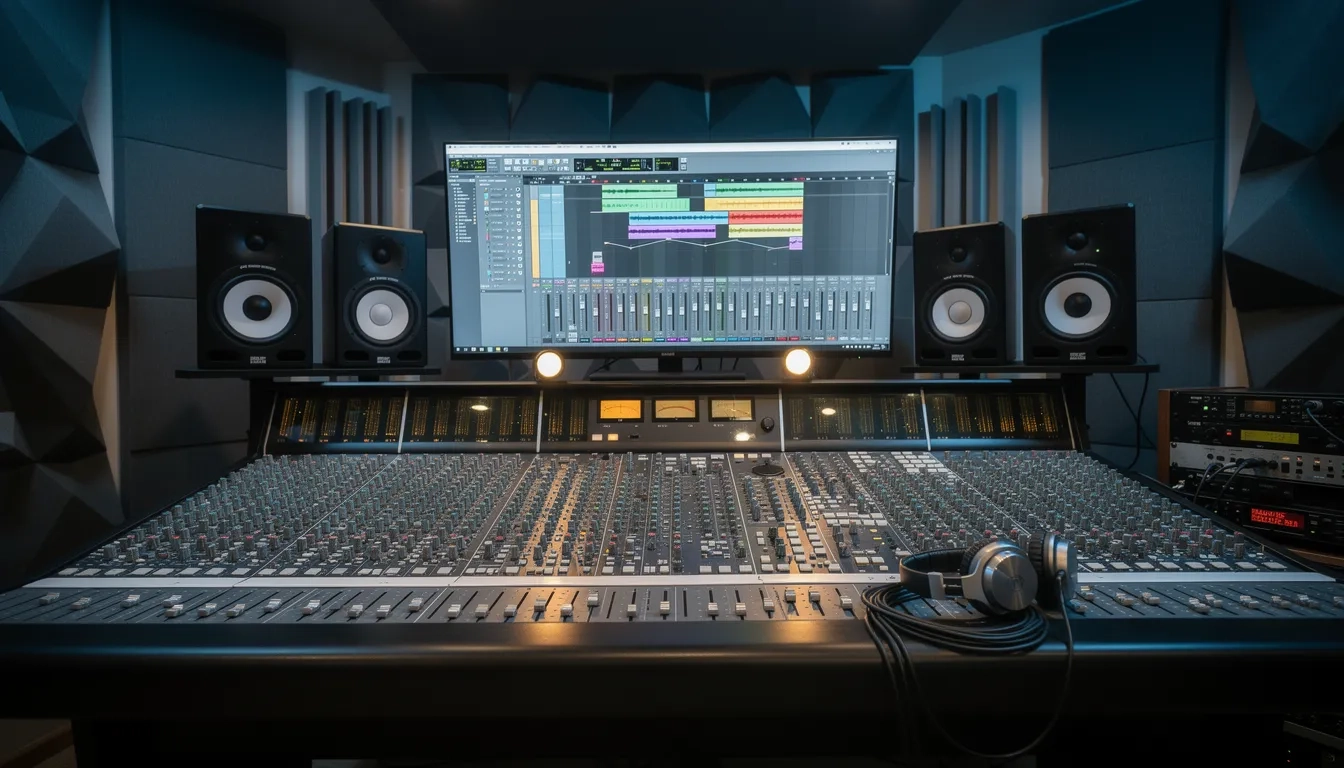
Two weeks into freshman year at Berklee, a student records a track in one of the school's 37 studios and emails it to an A&R contact their professor has known for fifteen years. That's the actual pitch for music production education. Not the curriculum — the room you're standing in and the people who walk through it.
Choosing the wrong school won't kill a career. But choosing the right one shaves years off the climb.
Why This Decision Is More Complicated Than It Looks
The music production world has split into two distinct tracks. One runs through creative artistry and DAW mastery; the other through technical audio engineering and acoustics. The best programs force you through both. Schools that let students specialize too early tend to produce graduates who are excellent producers but can't troubleshoot a phase alignment issue — or technical engineers who can't serve a creative vision.
There's also a structural difference between conservatories and music departments inside large universities. Conservatories like the Peabody Conservatory put you in a focused bubble of musicians, which accelerates skill development but narrows your network. A music production major at Carnegie Mellon or Northeastern sits next to computer science and engineering students, which opens cross-disciplinary doors that conservatories simply don't have.
For music production specifically (not classical performance), the university environment usually wins. The industry has moved so far toward software, streaming, and sync licensing that isolating yourself in a conservatory can leave you behind on the business and technology side. That's my honest read after looking at where working producers actually come from.
The Ultra-Competitive Tier
These programs are genuinely hard to get into. Don't let anyone tell you otherwise.
USC Thornton's music production major accepts fewer than 10% of applicants. Its Los Angeles location isn't just a perk — it's functionally part of the curriculum. Students regularly intern at major studios and film scoring sessions without leaving the metro area. The application requires a portfolio explanation and closes December 1, so start thinking about it in 10th grade, not 11th.
NYU offers two distinct paths that confuse a lot of applicants. The Clive Davis Institute of Recorded Music (acceptance rate around 10%) focuses on artist development and the music industry. The Steinhardt School's music technology program is more technically oriented and includes a semester-abroad option in Prague or Paris. Both are in New York. But they are not the same program, and applying to the wrong one is a real mistake people make.
Berklee College of Music is the brand name everyone recognizes. The largest independent music college in the world, based in Boston, offering 24 music production-related degree tracks and access to 37 recording facilities. Alumni include Quincy Jones, John Mayer, Esperanza Spalding, and Howard Shore — who composed the Lord of the Rings film scores. Admission requires demonstrating instrument proficiency. Early action deadline: November 1.
Strong Programs Without the Bloodbath Admission
Not every student can or should aim for USC or Clive Davis. These programs offer serious training with significantly better odds.
The University of Miami Frost School of Music made history as the first U.S. university to offer a four-year Music Engineering degree. Their Weeks Recording Studio runs three full-size professional consoles, unusual at the undergraduate level. Faculty member Dana Salminen has engineered records for Sting and Pitbull — that kind of real-world connection matters when evaluating whether a faculty lineup will actually open doors.
Indiana University's Jacobs School is one of the largest music schools in the world by enrollment, which means deep resources without the punishing admission odds of the elite programs. The B.S. in Music Production and Engineering is built around accumulating hundreds of hands-on studio hours, not just classroom instruction. GPA standards are more flexible than peer programs, making this a strong option for students whose musical skills outpace their high school academic record.
Drexel University in Philadelphia runs on a co-operative education model: students alternate semesters of classes with semesters working full-time at music companies. Drexel also operates Mad Dragon, a real student-run record label with actual releases. Program Director Jeff Apruzzese is a former Passion Pit bassist, which reflects the school's commitment to practitioners over academics. No performance audition required.
| School | Location | Admission | Notable Feature | Audition? |
|---|---|---|---|---|
| USC Thornton | Los Angeles | Very High (<10%) | Film/TV industry access | Yes (portfolio) |
| NYU Clive Davis | New York | Very High (~10%) | Artist development focus | Yes |
| Berklee | Boston | High | 37 studios, global alumni network | Yes |
| U of Miami Frost | Coral Gables | Moderate | First 4-year Music Engineering degree | Yes |
| Indiana Jacobs | Bloomington | Moderate | Hundreds of hands-on studio hours | Yes |
| Carnegie Mellon | Pittsburgh | Moderate | BS/MS in music and technology | Yes |
| Drexel | Philadelphia | Accessible | Co-op + student record label | No |
| Northeastern | Boston | Moderate | Mandatory co-op placements | No |
Your Address Is Part of Your Education
Here's something rankings don't capture: where a school is located determines who shows up as guest speakers, internship supervisors, and eventual employers.
Los Angeles is the answer for anyone oriented toward film scoring, major label production, or sync licensing. USC's location inside the LA music ecosystem means students aren't visiting studios — they're working in them. The density of industry within 15 miles of USC's campus is something no campus anywhere else can replicate.
New York makes sense for commercial music, brand partnerships, publishing, and live production. NYU's programs sit minutes from active recording studios and label offices. The connections you make on a Tuesday afternoon session in Midtown are the ones that matter at 28.
Boston — home to Berklee and Northeastern — is strong for its education-and-tech hybrid culture. The engineering talent in the city bleeds into audio technology R&D, and Berklee's alumni network spans every genre and continent. But Boston is not a music industry hub. Students who stay in Boston after graduation often pivot toward music education or tech, not toward major label or film work. Know that going in.
Nashville deserves a separate mention. Middle Tennessee State University's audio production program feeds directly into the country and Christian music industries. If that's where your career interest lies, MTSU has relationships that no school on the East or West Coast can match.
The Real Cost of a Music Production Degree
Let's be direct about money, because the numbers are serious.
Berklee's 2025-2026 tuition sits at $55,620 per year, with room and board adding another $20,680. Total estimated cost of attendance over four years: $308,406. After factoring in grants and scholarships (66% of enrolled students receive some aid, with an average award of $24,949), the realistic four-year net cost drops closer to $208,610 for many families. Still a major financial commitment.
The question isn't whether a music production degree is "worth it." It's whether this specific school's network, facilities, and location will accelerate your career faster than you could accelerate it alone.
Public university programs offer dramatically lower sticker prices. Indiana University's Jacobs School and the University of Michigan's Performing Arts Technology program are both public institutions with strong facilities and genuine industry connections. For in-state students, these programs can cost less than a third of Berklee's annual tuition.
Financial aid transparency varies wildly across schools. Before falling in love with any program, request the school's "average net price by income bracket" directly from the financial aid office. The listed tuition and the price you'll actually pay can differ by more than $30,000 per year. That $30,000 gap compounding over four years is the elephant in the room that most rankings articles never address.
Building a Portfolio That Gets You In
The portfolio is what separates admitted students from rejected ones at competitive programs. Grades and test scores are table stakes. What distinguishes admitted students is the quality and range of their production work.
Here's what the best programs are actually looking for:
- Originality over polish. A track with a slightly rough mix but a genuinely interesting arrangement will beat a technically pristine clone of a trending genre. Reviewers at USC and Berklee have heard the latter a thousand times.
- Acoustic capture alongside electronic production. Programs want evidence that you can mic a drum kit or record a string quartet — not just drag samples from a library. This signals genuine engineering literacy.
- Genre range. Submitting five tracks in the same style suggests you can't adapt. Three tracks across different styles reads as a more confident applicant.
One practical note: Drexel and Northeastern don't require auditions. If your production chops are real but you're not a strong live performer, these programs give you a serious co-op-driven path into the industry without that gate. Skipping the audition requirement doesn't mean skipping the career outcome.
Bottom Line
- Film scoring or major label production? USC Thornton or NYU Clive Davis should top your list. Start the application process early and treat the portfolio like a product, not homework.
- Widest resource pool and alumni network? Berklee is the answer — but run the actual net price numbers before committing. Their net price calculator is worth 47 minutes of your time.
- Budget is a real constraint? Indiana University Jacobs or the University of Michigan deliver serious programs at public university prices, particularly for in-state students.
- Learn by doing, not sitting in class? Drexel's co-op model and Northeastern's mandatory placements put you in professional environments faster than traditional curricula will.
- Wherever you land, the school is a launching pad. Visit campuses, ask to sit in on a studio session, and talk to seniors before signing anything.
Frequently Asked Questions
Do I need to play an instrument to get into a music production program?
Most competitive programs require demonstrated musical ability — Berklee specifically requires an instrument audition. That said, Drexel and Northeastern do not require performance auditions, making them strong options for producers whose expertise is DAW-based rather than instrument-focused.
Is Berklee College of Music worth the price?
For students who fully use the school's resources — studio time, industry showcases, alumni mentorship — Berklee consistently places graduates in the music industry. The honest answer depends entirely on your aid package. At full price ($55,620/year in tuition alone), the financial math is tough. At a 40–50% merit scholarship, which Berklee does award to strong admits, it becomes a different calculation.
What's the real difference between music production and audio engineering degrees?
Music production focuses on the creative process: arrangement, sound design, artist direction, and bringing a record to market. Audio engineering focuses on the technical side: acoustics, signal processing, live sound reinforcement, and post-production. Many programs blend both, but the ratio matters. USC Thornton and Berklee lean toward production; University of Miami and Carnegie Mellon lean toward engineering.
Is an online music production degree respected in the industry?
Berklee offers an online BA in Music Production that carries the school's name and some of its credibility. But be honest about the tradeoff: studio access, in-person collaboration, and the informal network that forms in hallways and session rooms don't transfer online. Online programs work well for skill development and for students already embedded in local music scenes. They're a weaker substitute for students who don't yet have an industry foothold.
Do music production majors actually need a college degree to work?
Plenty of working producers are self-taught. A degree from a competitive program gives you three things that are genuinely hard to replicate on your own: structured access to professional gear, faculty relationships that open early-career doors, and a peer cohort that becomes your network for decades. For film scoring or broadcast audio, formal credentials carry real weight. For commercial pop or hip-hop production, the portfolio usually matters more than the diploma.
Sources
- The 10 Best Music Production Schools in 2026 - Music School Central
- 10 Best Music Production Schools in the U.S. (2026) - Learn.org
- 10 Best Colleges for Music in the US in 2026 - AdmissionSight
- Berklee College of Music Tuition and Related Costs 2025–2026
- Berklee College of Music Tuition & Cost 2026 - Research.com
- Top Music Production Colleges in the U.S. 2026 - Learn.org