Colleges With the Best Financial Aid Packages in 2026
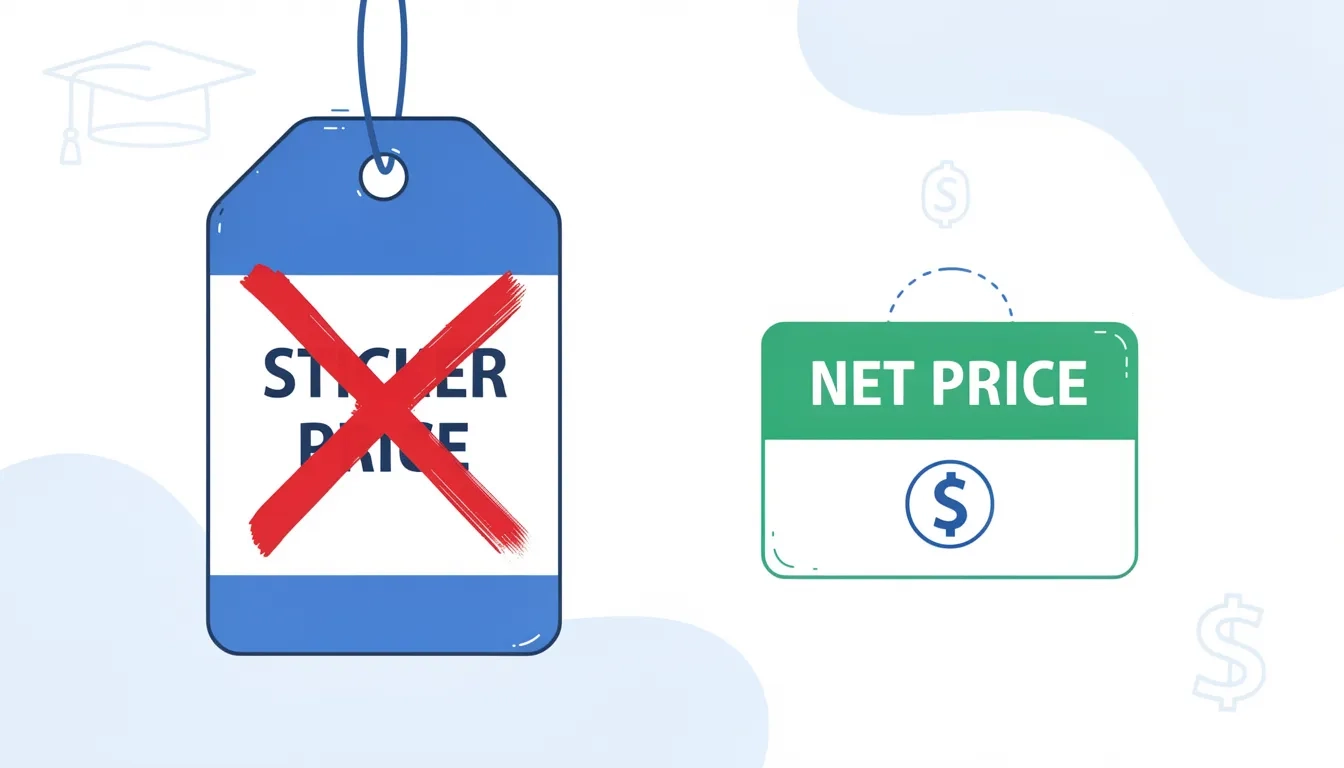
Princeton's sticker price for 2025-26 is $86,380. The average scholarship recipient pays about $10,380 for the year. That gap — $76,000 in grants — is why families who cross elite schools off their list based on headline tuition numbers are often making the single most expensive mistake of the college search. The schools with the biggest price tags are frequently the schools with the most endowment cash to redistribute.
Why the Sticker Price Lies to You
The number that actually matters is net price: total cost of attendance minus grants and scholarships. On that metric, several "expensive" schools beat mid-tier universities by a wide margin.
Princeton's undergraduate financial aid budget for 2025-26 hit $306 million — an 8% increase over the prior year. That money has to go somewhere, and it goes to students. The average grant now covers nearly 90% of total charges. Meanwhile, a family at a mid-ranked private university paying full freight might spend $45,000-$55,000 per year with far less selectivity.
The sticker price is the price almost nobody pays. The net price is the price almost nobody looks up.
This is the core problem. Parents see "$90,000 per year" and stop reading. Students never apply. And they never find out they would have qualified for a package that made the elite school cheaper than the fallback.
The Gold Standard: No-Loan, Full-Need Schools
Not all financial aid policies are created equal. There's a meaningful gap between a school that "offers aid" and one that covers your full demonstrated financial need without making you borrow a dollar.
No-loan, full-need policies are the benchmark worth chasing. These schools cover the gap between what a family can reasonably contribute and total cost — entirely through grants and work-study:
- Princeton University: Eliminated loans from undergraduate packages in 2001, making it the first major university to do so. Families earning under $100,000 pay nothing. Those earning under $200,000 often have full tuition covered. The 2025-26 data shows 73% of the incoming Class of 2028 qualifies for aid, compared to just 52% in the Class of 2008.
- Yale University: No-loan policy, meets 100% of demonstrated need. Families under $75,000 pay $0. Average need-based scholarship: $61,500.
- Williams College: No-loan, full-need, plus a Book Grant that literally covers textbooks (a detail most schools ignore). Average aid $68,966, net cost $15,894 per year.
- Amherst College: One of the only schools in the country that is need-blind for both domestic and international students. No loans. Average net price $19,275.
- Pomona College: No-loan, 100% demonstrated need covered. Average grant $55,000.
- Columbia University: No loans for families earning under $150,000, meets full demonstrated need. According to The Princeton Review's 2026 rankings, Columbia's average need-based scholarship is $73,702.
The pattern: small enrollments plus massive endowments equals more dollars per student. Williams has roughly 2,000 undergrads. That math works differently than at a school with 40,000 students.
Schools With Explicit Income Thresholds
Some schools don't commit to no-loan policies across the board, but publish clear income cutoffs that tell you exactly what to expect. These are genuinely useful for planning.
| School | Income Threshold | What You Pay | Avg. Aid |
|---|---|---|---|
| Harvard | Under $100k → free; under $200k → free tuition | Net: ~$17,525/yr | $68,015 |
| Caltech | Under $100k → full cost covered; under $200k → tuition | Net: ~$14,513/yr | $72,373 |
| Stanford | Under $75k → tuition + room/board; under $150k → tuition | Net: ~$20,000/yr | $62,000 |
| Rice | Under $65k → full tuition + room/board; under $140k → tuition | Net: ~$20,977/yr | $66,070 |
| Dartmouth | Under $100k → free tuition; under $125k → no loans | Net: ~$23,394/yr | $56,000 |
| MIT | Under $90k → pay nothing | Net: ~$22,969/yr | $53,500 |
| Colby College | Under $75k → free tuition; under $150k → max $15k/yr | Net: ~$16,219/yr | $69,201 |
Harvard extended its free-tuition threshold to families earning up to $200,000 in 2024 — a significant jump from the prior $150,000 cutoff. That covers a substantial slice of the American middle class. A family earning $160,000 who assumed they "made too much" for Harvard aid would be wrong.
The counter-intuitive case: a family earning $130,000 will often pay less at Harvard, Princeton, or Caltech than at a state flagship university, once real aid numbers are factored in. The Ivies aren't just for low-income students.
Public University Programs Worth Your Attention
Public schools get left out of "most generous aid" conversations because people conflate "affordable tuition" with "generous aid policy." They're not the same thing. But several public programs deliver exceptional value, especially for in-state students.
UNC Chapel Hill's Carolina Covenant is one of the strongest programs in public higher education. Students whose family income falls below 200% of the federal poverty line can earn a debt-free degree through a combination of grants, work-study, and scholarships. No loans. Average net price for UNC: $10,038 per year.
AccessUVA at the University of Virginia meets 100% of demonstrated need for all undergraduates and eliminates loans for families earning under $80,000. Average net price: $17,579. For an in-state student, that's a remarkable deal at a top-25 university.
The Go Blue Guarantee at University of Michigan covers tuition and fees for Michigan residents from families earning under $65,000. UC San Diego's Blue and Gold Opportunity Plan covers tuition and fees for California residents earning under $80,000 — at a campus that now ranks among the top research universities globally.
For middle-income in-state families who don't hit the income thresholds at elite private schools, these programs often represent a better deal than chasing a private school aid package.
The Outlier Cases
Berea College in Kentucky charges no tuition. None, for any student. Every admitted student receives a full tuition scholarship, and the college runs a work-study model where students work 10-15 hours per week in campus jobs (everything from farming to tech support). The average annual net cost is $1,196. That covers room, board supplements, and fees.
The catch: Berea exclusively admits students with demonstrated financial need, focuses on Appalachian students specifically, and is highly selective for what it is. Not every student qualifies or fits. But for those who do, it's the lowest real-cost four-year degree in the country.
Then there's Olin College of Engineering in Massachusetts (a tiny school with roughly 350 students that most families have never heard of). Every single admitted student automatically receives a half-tuition scholarship worth about $25,000 per year — no application, no essay, no separate process. Forty-five percent receive additional need-based aid on top of that. For engineering students with strong profiles, it's worth a serious look.
How to Actually Compare Aid Packages
Getting an offer letter is one thing. Reading it correctly is another. Most families make at least one of three mistakes.
Mistake one: counting loans as aid. An award letter might show $48,000 in "financial assistance" that buries $22,000 in federal loans inside the total. That's not aid. That's debt with a friendlier font. Always strip out loans before comparing schools side by side.
Mistake two: skipping the net price calculator. Every college is required by law to publish one on their website. Run the numbers before paying an application fee. The calculators take about 15 minutes, use the same variables as the actual aid formula (roughly), and can completely reorder your college list. A school charging $80,000 might net out cheaper than one charging $55,000.
Mistake three: not distinguishing merit from need. Schools like Vanderbilt, Rice, and University of Tulsa are aggressive with merit scholarships regardless of family income. Schools like Harvard, Amherst, and Pomona concentrate almost entirely on need-based aid and offer minimal merit money. A straight-A student from a wealthy family will do better at merit-heavy schools. A student with documented financial need will typically do better at need-focused schools with large endowments.
Before signing an enrollment deposit, ask every financial aid office these four questions:
- Does your package include loans, and if so, how much?
- Is aid renewable each year — and what are the academic requirements?
- What happens if my family's financial situation changes mid-enrollment?
- Do you have a formal appeal process for comparing packages?
That third question matters more than families realize. Schools with well-funded aid programs (Caltech, Princeton, Williams) often have policies to increase aid if income drops due to job loss, divorce, or medical costs. Smaller schools may not.
What The Princeton Review's 2026 Rankings Actually Measure
The Princeton Review publishes annual "best financial aid" rankings that blend two data sources: raw award amounts reported by schools, and student satisfaction scores from surveys asking how happy students are with their packages. The satisfaction piece captures something the dollar figures miss — whether the aid actually shows up the way it was promised, whether packages shift dramatically between year one and year two, and whether the aid office is easy to work with.
Their 2026 list put Princeton first with an average need-based scholarship of $73,711 against a sticker price of $86,668, yielding a net cost of $12,957. Second: Columbia at $73,702 average scholarship and a net of $15,723. Third: Amherst College at $71,342 average scholarship.
Rice University placed fourth at $66,070 average scholarship. For a school in Houston with a sticker of $87,047, that brings the net to about $20,977 — which is genuinely competitive with in-state public university costs for out-of-state families.
Student satisfaction data is imperfect (surveys skew toward financially comfortable students who are happy anyway), but it's a reasonable sanity check against schools that quote impressive aid averages while making students fight for every dollar.
Bottom Line
- Run the net price calculator first. Before removing any school from your list based on sticker price, spend 15 minutes on their net price calculator. This single step has the highest ROI of anything in the college search.
- Prioritize no-loan, full-need schools if you have documented financial need. Williams, Amherst, Princeton, Pomona, Yale, and Columbia are the strongest cluster. Colby and Dartmouth are close behind.
- Don't ignore public programs. UNC's Carolina Covenant, UVA's AccessUVA, Michigan's Go Blue Guarantee, and UC San Diego's Blue and Gold Opportunity Plan deliver real value for in-state students, often at net costs well under $20,000 per year.
- Appeal. If a comparable school offers more, say so in writing. Many schools with large endowments have room to revise.
- The writing is on the wall: for families earning under $100,000, Harvard, Princeton, MIT, and Caltech may cost less per year than community college plus a part-time job. The sticker price is not the price.
Frequently Asked Questions
What does "meets 100% of demonstrated need" actually mean?
It means the school will cover the gap between what the federal financial aid formula says your family can afford and the full cost of attendance. What it does not guarantee: that the formula matches your real financial situation. The federal Student Aid Index (SAI, which replaced the old EFC on FAFSA) is an estimate, and many families feel it overstates their ability to pay. Schools also apply their own institutional methodology, which can be more or less generous than the federal calculation.
Is it true that Ivy League schools can be cheaper than state universities?
Yes, for families with documented financial need, this is often true and not widely known. A family earning $75,000 per year pays nothing at Harvard, Yale, or Princeton. A state flagship university might run $14,000-$22,000 per year in tuition alone before room and board. The math genuinely favors the Ivy League for lower and middle-income families who are admitted.
What is the difference between need-blind and need-aware admissions?
Need-blind schools make admissions decisions without considering your ability to pay. Need-aware (or need-sensitive) schools may disadvantage applicants who require more aid, because accepting them costs the institution more money. Amherst is among the few schools need-blind for both U.S. and international students. Harvard, Princeton, MIT, Yale, Dartmouth, and Williams are need-blind for U.S. citizens but factor finances for international applicants.
Should I appeal a financial aid offer?
Yes — and more families should do this than actually do. If you have a competing offer from a school of similar academic profile, or if your financial situation changed after submitting FAFSA, contact the financial aid office directly with documentation. Many schools have formal Professional Judgment (PJ) review processes. Schools with large endowments have more discretion to revise packages. A clear, polite, documented appeal can recover several thousand dollars per year.
Does applying Early Decision affect my financial aid?
At schools that meet 100% of demonstrated need through formula-based packages — Princeton, Yale, Williams, Amherst, Pomona — the ED commitment doesn't reduce your aid. The package is calculated the same way regardless of when you applied. At schools that mix merit and need-based aid, or where packages involve negotiation rather than formula, applying ED can lock you in before you can compare alternatives. The safest rule: apply ED only to schools with transparent, formula-based need aid policies where you've already run the net price calculator and are comfortable with the expected outcome.
What makes Berea College unusual compared to other low-cost options?
Berea charges zero tuition to every student, funded by its endowment rather than tuition revenue. That model is unique in American higher education (a few work colleges like College of the Ozarks and Paul Quinn College use similar approaches). The trade-off is that Berea's admissions are mission-specific — priority goes to first-generation and low-income students from Appalachian communities — and all students participate in a labor program as a graduation requirement. It's not for everyone, but for eligible students, the $1,196 average annual net cost is genuinely unmatched.
Sources
- Budget Plan Underscores Princeton's Commitment to Access and Affordability | Princeton.edu
- 25 Most Generous Colleges and Universities for Financial Aid | BestColleges
- Top 25 Colleges with the Best Financial Aid 2026 | Edvisorly
- Top Colleges for Financial Aid: The Princeton Review's 2026 List | CNBC
- The Top Private and Public Colleges for Financial Aid | CNBC
- Online Colleges with the Most Generous Financial Aid in 2026 | Academic Influence