How to Deal With a Bad Roommate (And Keep Your Sanity)
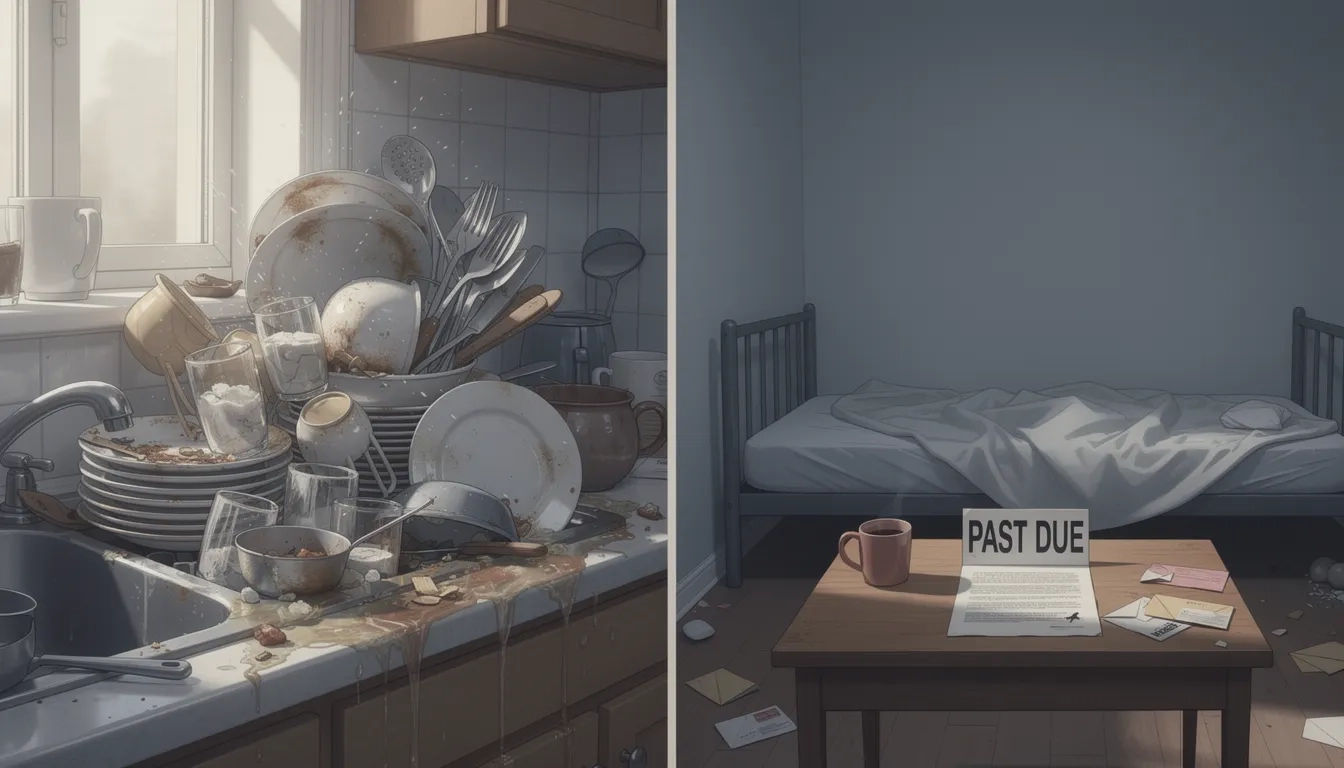
Most people in a bad roommate situation know something's wrong weeks before they say a word. They draft text messages and delete them. They eat dinner in their room to avoid the kitchen. They rehearse confrontations in the shower and then go to sleep without having them. And then, six months later, they're describing the full saga to a friend, wondering how things got so bad.
They got bad because nobody acted early. That's the pattern, and breaking it is the whole game.
Know Which Problem You're Actually Dealing With
Not all bad roommate situations call for the same response. A roommate who leaves dishes in the sink needs different handling than one who stopped paying rent last month. Treating every problem the same way wastes time and often makes things worse.
Most roommate problems fall into one of these four categories:
- The Oblivious Offender: genuinely unaware their habits bother you — noise, mess, clutter. Usually the easiest to fix.
- The Boundary Pusher: brings overnight guests without asking, borrows things without permission, ignores rules you both agreed to.
- The Disappearing Payer: stops contributing to rent or shared bills, often with a shifting series of excuses.
- The Actively Hostile: creates deliberate tension, threatens you, or interferes with your access to shared spaces.
The first two categories are almost always fixable through honest conversation and a written agreement. The last two may require your landlord, a mediator, or a lawyer.
Here's the non-obvious piece: most situations start as Category 1 and escalate to Category 3 because nobody said anything early. The behavior gets normalized on both sides. By month four, your roommate genuinely doesn't understand why you're upset — and you genuinely can't remember a time when you weren't.
Have the Conversation You've Been Avoiding
The "right moment" to have a hard conversation will not appear on its own. You have to create it.
Pick a neutral time when neither of you is stressed or just walked through the door. Mental Health America specifically recommends in-person conversations over text — tone is almost impossible to read in writing, and a misread tone can turn a minor complaint into a full argument before you've made your actual point.
The most effective technique in any of these conversations is to speak about behavior, not character. "It's hard for me to sleep when music plays after midnight" lands completely differently than "You're inconsiderate." The first invites a solution. The second triggers defensiveness, and once someone feels personally attacked, the conversation stops being about noise and starts being about whether they're a good person. You cannot solve a noise problem that way.
A few ground rules worth following:
- Address one issue per conversation — not a backlog of every grievance you've accumulated
- Ask for your roommate's perspective before proposing a fix
- End with a concrete, specific ask: "Can we agree to quiet hours after 11 p.m. on weeknights?"
- If things improve, say so — positive reinforcement works on adults
One thing people get wrong: they treat the conversation as a verdict. It isn't. It's information exchange. Go in curious, not combative.
Don't Just Talk — Write It Down
A verbal agreement is nearly worthless when tensions rise again three weeks later. Both people remember the conversation differently. Both feel justified. This is human nature, not bad faith.
A written roommate agreement removes that ambiguity entirely. Mental Health America explicitly recommends signing one to create shared accountability — and it doesn't need to be a formal document. A shared Google Doc that both people have access to works fine.
A roommate agreement isn't about distrust. It's about making implicit expectations explicit before resentment has a chance to build.
What a good roommate agreement covers:
- Cleaning schedule (specific tasks, specific days — "bathroom on Sundays" not "take turns")
- Quiet hours on weekdays and weekends
- Guest and overnight visitor policies
- How shared groceries or supplies get purchased and split
- What happens if one person can't make rent one month
The drafting process itself is useful. If you discover you and your roommate can't agree on what "clean" means before you've even moved in together, that's information worth having. It's better to surface it now than after six months of silent resentment.
When to Bring In a Third Party
You've talked. Maybe twice. Things improved for ten days and then went back to exactly how they were. This is the moment most people give up and either suffer in silence or blow the whole situation up. There is a middle path.
Resident Advisors are underused, especially by students who assume an RA is only for emergencies. Most RAs receive formal conflict mediation training and can facilitate a structured three-way conversation that neither roommate could manage alone. The presence of a neutral person changes the dynamic significantly.
For off-campus renters, community mediation services are worth a serious look. Cities like Boston offer free or low-cost roommate conflict mediation through their housing department — sessions are confidential, and both parties control the outcome. According to mediation providers who specialize in housing disputes, most roommate conflicts resolve in one or two sessions.
Private mediators cost more (typically $150–$300 per session), but they move faster than any legal process and are far less confrontational than pulling a landlord into the middle of things. For financial disputes — a roommate who owes back utilities, for instance — one mediation session can produce a signed repayment agreement and save months of informal conflict.
The mediator's job is not to decide who's right. Their job is to help each person articulate what they actually need, then find an arrangement both can live with. That reframe alone defuses a lot of hostility.
The Legal Layer: What You Actually Own and Owe
Most people don't think about their lease until something goes wrong. Then it matters enormously.
Joint and several liability is the phrase you need to understand. If you and your roommate both signed the same lease, you are each individually responsible for 100% of the rent. Not your half. The whole thing. According to Super Lawyers' analysis of landlord-tenant law, if your roommate stops paying, the landlord can legally pursue you for the entire amount and file for eviction against both of you — regardless of your internal agreement about who owes what.
What to do if a roommate stops paying:
- Document all missed payments and every piece of communication in writing
- Notify your landlord early, before it becomes a default
- Send your roommate a formal demand letter specifying the exact amount owed and a payment deadline
- Explore whether your landlord will accept your share separately while pursuing the other tenant
- If they still don't pay, small claims court lets you recover amounts up to your state's limit (filing fees typically run $30 to $75)
One legal point that surprises people: you cannot lock out a roommate, even one who owes you money. Changing the locks without a court order constitutes unlawful exclusion in most states — the same protection that keeps landlords from locking you out. The remedy is always through formal proceedings. Self-help measures can get you sued.
| Situation | Best move |
|---|---|
| Roommate won't pay rent | Document everything, notify landlord, send demand letter |
| Roommate violates lease terms | Report to landlord in writing with documentation |
| Roommate is threatening you | Contact police, request emergency protective order |
| You want them out but they won't leave | Consult a landlord-tenant attorney |
| You want to leave early | Review your lease's subletting or early termination clause |
What Chronic Conflict Does to You
Research published in the Journal of Public Health Student Capstones found that 5.6% of undergraduates said roommate difficulties adversely affected their academic performance — a figure that actually exceeded the percentage who cited alcohol use. For a problem people write off as minor, that's a striking finding.
Chronic conflict at home erodes what psychologists call psychological safety — the felt sense that your living space is somewhere you can actually decompress. When that's gone, every other stressor in your life lands harder. Sleep quality drops. Concentration fragments. The effects compound quickly.
Practical self-protection while you're working through it:
- Identify one or two spaces outside your apartment where you genuinely recharge (a library, a coffee shop, a friend's place with an open-door policy)
- Set a mental cutoff time for thinking about the conflict — ruminating at midnight doesn't move things forward
- Talk to someone outside the situation; isolation makes the problem feel permanent
This is also one of those cases where talking to a therapist makes real sense, not because anything is broken, but because a neutral person can help you distinguish between an actual unsolvable situation and accumulated stress that's distorting your read on things.
Deciding When to Just Leave
My honest take: most people stay in bad roommate situations far longer than they should, not because they can't leave, but because leaving feels like admitting defeat. That framing is the problem.
If the situation is affecting your sleep, your work, or your mental health for more than four to six weeks with no meaningful improvement, leaving is not a failure. It's a reasonable decision based on real evidence.
Before you walk, check a few things:
- Your lease's subletting clause: many leases let you find a replacement tenant with landlord approval, letting you exit without paying a penalty
- Room transfer options: in university housing, these exist precisely for situations like this
- Your landlord's flexibility: landlords often prefer helping you find a workable arrangement over absorbing $1,000 to $3,000 in turnover costs
If you're stuck in a lease that seems to prohibit early exit, a single hour with a landlord-tenant attorney (commonly $200–$350 for a consultation) can clarify your actual options. Landlords in most states have a legal duty to re-rent the unit, which limits how long they can hold you liable after you leave. Local tenant rights organizations often offer free advice for exactly these situations.
Bottom Line
The core of it:
- Talk early and specifically. Behavior-focused language opens doors; character attacks slam them shut.
- Write it down. A signed roommate agreement eliminates the "I don't remember agreeing to that" problem before it starts.
- Escalate deliberately. RA or mediator before the landlord; landlord before a lawyer. Match the tool to the problem.
- Know your legal exposure. Joint lease means joint liability for the full rent. Document everything in writing.
- Give yourself permission to leave. A new living situation is a solution, not a surrender.
The single most important thing is to act sooner than feels comfortable. Every week of inaction makes the first conversation harder and the conflict more entrenched. The discomfort of a direct conversation lasts maybe 20 minutes. The discomfort of a six-month roommate standoff does not.
Frequently Asked Questions
Can I force my roommate to move out if we're both on the lease?
Not unilaterally. Since you're both tenants with equal rights under the lease, removing a co-tenant requires either their voluntary agreement to leave or a formal eviction process initiated by the landlord. You can ask your landlord to pursue eviction if your roommate is violating lease terms, but you cannot initiate or execute that process yourself.
What if my roommate is a subtenant and not on the lease?
If you're the primary tenant and they sublet from you, you generally have more control. You can typically terminate their sublease with proper written notice under your state's rules — usually 30 days for a month-to-month arrangement. Document the termination notice in writing and keep a copy. The specifics vary significantly by state, so check your local tenant laws.
Is it a myth that moving out means I owe rent for the rest of the year?
Mostly, yes. Many leases do have early termination clauses, but landlords in most states carry a legal "duty to mitigate" — they must actively try to re-rent the unit. If they find a new tenant quickly, your liability shrinks accordingly. You're not automatically on the hook for twelve months of rent. Review your specific lease language and, if uncertain, ask a local tenant rights organization before assuming the worst.
My roommate and I just clash in personality. Is that actually fixable?
Often yes — with structure. Personality-based friction almost always comes from unstated expectations colliding. One person's "tidy" is another person's "obsessive clean freak." A written agreement that specifies behaviors rather than standards (dishes washed within 24 hours of use, not "keep the kitchen clean") gives both people a shared reference point instead of an ongoing argument about whose definition is correct.
When does a roommate problem become a police matter?
When it crosses from conflict into threats, property damage, or physical blocking of your access to shared spaces. If your roommate threatens you, damages your belongings, or won't let you into your own home, file a police report immediately. Document the incident with timestamped notes and photos. A landlord-tenant attorney can advise you on whether an emergency protective order is appropriate for your specific situation.
Should I involve my landlord early or late in a roommate conflict?
Late for personal conflicts (noise, cleanliness, personality clashes) — landlords generally have no legal obligation to mediate personal disputes, and involving them early can create friction that outlasts the original problem. Early for anything that touches the lease: nonpayment of rent, subletting violations, property damage, or safety concerns. When money or legal liability is in play, the landlord needs to know before the situation becomes a default.
Sources
- How to Deal with Roommate Problems | Mental Health America
- Roommate Rental Disputes: What Happens if They Stop Paying Rent | Super Lawyers
- Resolving Conflicts with Tenants | Boston.gov
- Roommate Dispute Mediation | My Pathfinder Mediation
- Negative Roommate Relationships and Health | Journal of Public Health Student Capstones
- Overwhelmed by Roommate Conflict? You're Not the Only One | Naya Therapy