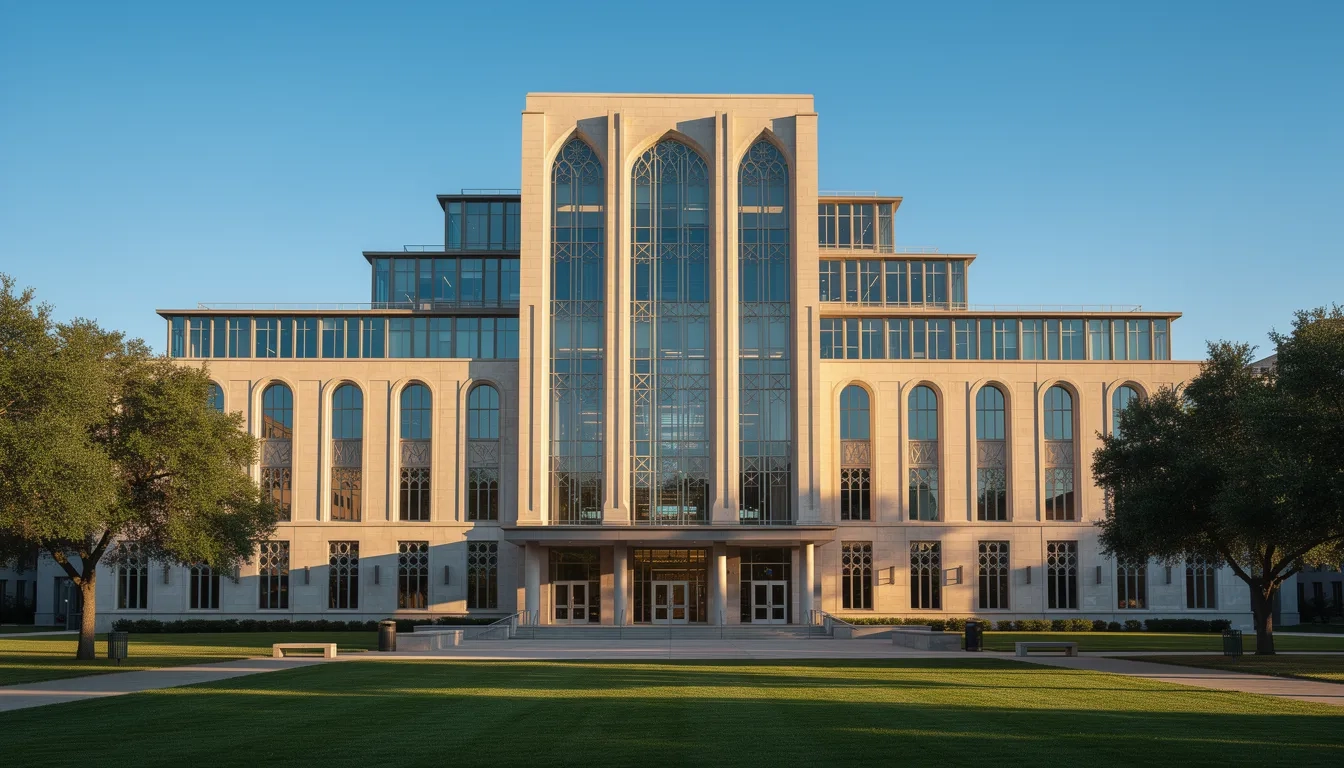
Rice vs Emory: Comparing Two of the South's Top Research Universities

Put Rice's entire annual research portfolio next to Emory's and you get a gap that would embarrass most Fortune 500 budget meetings: $218 million versus $1.075 billion. That's not a rounding difference. It's the story of two very different research machines, one built around tight, materials-heavy engineering labs in Houston, the other built around a sprawling medical and public health complex in Atlanta that runs its own primate research center. Neither approach is "better" in the abstract. But if you're choosing where to spend five or six years of your life as a grad student, or trying to figure out where your tuition dollars actually flow, the difference matters a lot.
The Money: Why Emory's Research Budget Dwarfs Rice's
Let's start with the number everyone glosses over: research scale isn't really comparable between these two schools, because they're not playing the same game.
Emory secured more than $1 billion in sponsored research awards for the third straight year, with FY25 landing at $1.075 billion, according to Emory's own research office. Roughly half of that flows through the School of Medicine, which pulled in over $511 million from the NIH alone in 2025 — good enough for No. 17 nationally among NIH grant recipients, up from No. 19 the year before.
Rice, by contrast, reported $218 million in total research funding for fiscal year 2024, a 6.5% jump from the prior year. About 65% of that comes from federal agencies (NSF, NIH, DOD, DOE, NASA), with industry, nonprofits, and state sources filling the rest.
The real takeaway isn't "Emory is 5x bigger." It's that Emory's number is inflated by an entire medical enterprise — hospitals, clinical trials, a primate center — that Rice simply doesn't have. Compare the engineering and physical sciences budgets alone and the gap shrinks dramatically.
Here's the side-by-side:
| Metric | Rice University | Emory University |
|---|---|---|
| Total sponsored research (latest FY) | $218 million (FY2024) | $1.075 billion (FY2025) |
| NIH funding rank | Not a top-tier NIH recipient | No. 17 nationally ($511M+) |
| Federal share of funding | ~65% | Majority via NIH/medical grants |
| Carnegie classification | R1, Very High Research Activity | R1, Highest Research Activity |
| Endowment (FY2024) | ~$7.93 billion | ~$12.4 billion |
| Signature research infrastructure | Smalley-Curl Institute, Carbon Hub, NEWT Center | Emory National Primate Research Center, Emory Vaccine Center |
Both schools took hits when federal funding got shaky in 2025. Rice's own reporting noted federal money was down roughly 26% that fiscal year, driven by unexpected NSF cuts, and the university launched a bridge funding program to cover faculty whose grants got unexpectedly frozen or terminated. Emory, facing its own exposure through NIH indirect-cost policy changes, announced plans to curb spending and staffing in March 2025. Neither school is immune to Washington's mood swings — they're just exposed through different pipelines.
Where Each School Actually Wins: Specialization, Not Size
Raw dollars miss the more useful question: what is each place actually good at?
Rice built its research identity around materials science and energy, and it shows. The Smalley-Curl Institute for Nanoscale Science and Technology — the nation's first nanotech center, founded on the back of Rice's 1985 Nobel Prize-winning discovery of the buckyball — still anchors work in quantum magnetism, plasmonics, and carbon nanomaterials. Two more centers extend that DNA: the Carbon Hub, chasing zero-emissions hydrogen and carbon materials production, and the NEWT Center, which applies nanotechnology to water treatment.
Emory's center of gravity sits almost entirely in biomedicine and global health. The Emory National Primate Research Center (renamed from Yerkes in 2022 after the university confronted the original namesake's eugenics ties) has run for more than 85 years and holds one of the largest funding bases among the seven NIH-supported primate centers nationally. Attached to it, the Emory Vaccine Center runs active HIV, hepatitis C, Zika, and Group A strep vaccine programs, and its Hope Clinic is one of eight national sites in NIAID's Vaccine Trials Evaluation Units — meaning candidate vaccines developed elsewhere often get their first human trials at Emory.
A framework worth using when you're sizing up "best research school" claims:
- Ignore total dollar figures if your field isn't medicine. A $1 billion research budget dominated by NIH grants tells you almost nothing about a chemical engineering lab's resources.
- Check where the money actually lands. Emory's public health and medical schools absorb the bulk of its funding; Rice's engineering and natural sciences absorb the bulk of its (smaller) pool.
- Look at named centers, not press releases. A university that's genuinely strong in an area usually has a dedicated institute with its own building, endowment, and multi-decade track record — like Smalley-Curl or the Emory Vaccine Center — not just a grant here and there.
The common mistake is assuming bigger research budgets mean better outcomes for every student. A materials science PhD candidate would get vastly more lab access, equipment, and faculty attention per dollar at Rice than at a school where the budget skews toward hospital-based clinical trials.
Campus Scale and Student Experience
Size differences ripple into daily life for the humans doing the actual research.
Rice enrolled 4,104 graduate students as of the most recent count, with 1,690 pursuing doctoral degrees — and roughly half of Rice's PhD students get direct funding through research grants rather than teaching assistantships. Over 62% of Rice undergrads participate in research at some point, a genuinely high rate that reflects Rice's small overall size (it's still one of the more selective, intimate national research universities).
Emory runs a much larger operation across its College, School of Medicine, Rollins School of Public Health, nursing school, and business school, with individual departments regularly landing in national top-20 and top-5 rankings for NIH funding — Pediatrics ranked No. 3 nationally in 2025, Biomedical Engineering and Biomedical Informatics tied for No. 5.
- Choose Rice if you want tight-knit labs, direct access to named PI's, and a materials/engineering-first culture where undergrads routinely land in real research within their first two years.
- Choose Emory if you want proximity to the CDC (headquartered a few miles away in Atlanta), a medical ecosystem with hospital-affiliated clinical research, and public health infrastructure most engineering-focused schools can't match.
- Choose neither reflexively — the "which is more prestigious" framing misses that these schools barely compete for the same research dollars in the same fields.
Rankings, Reputation, and the Marketing Gap
US News has Rice at No. 17 nationally for 2026, with Rice also climbing to No. 15 for innovation (up from No. 29 the prior year) and No. 15 for undergraduate research specifically. Emory's overall national ranking sits in a similar band, though it doesn't get the same "most innovative" spotlight Rice does — probably because innovation rankings tend to reward visible engineering and interdisciplinary programs over the quieter grind of clinical trial infrastructure.
Post-graduation earnings tilt slightly toward Rice too: Rice grads earn about $86,400 on average ten years out versus $81,500 for Emory grads, a gap of roughly $4,900 a year that's easy to attribute partly to Rice's heavier STEM and engineering concentration (those majors just pay more early-career, regardless of school quality).
None of this settles which school does "better" research. It mostly confirms that rankings reward different things than research budgets do, and neither metric alone should decide where you apply.
Common Misconceptions Worth Correcting
A few things people consistently get wrong when comparing these two:
- "Emory does more research, so it's the stronger research school." Wrong framing — Emory does more medical research. In materials science, chemical engineering, or nanotechnology, Rice's smaller, more concentrated labs often out-punch what a much larger medical-heavy budget would suggest.
- "Rice is just an engineering school." Not really — Rice has meaningful humanities and social science programs, they're just dwarfed in press coverage by the Carbon Hub and Smalley-Curl headlines.
- "Bigger endowment means better-funded labs." Emory's $12.4 billion endowment (versus Rice's roughly $7.93 billion) funds financial aid, hospital operations, and long-term investment far more than it funds any single lab's day-to-day grant money — endowment size and annual research funding are only loosely related.
Bottom Line
- If your field is biomedical, public health, vaccine science, or anything touching clinical trials, Emory's infrastructure — the Primate Research Center, the Vaccine Center, the NIH funding pipeline — is hard to match at a school Rice's size.
- If you're chasing materials science, nanotechnology, energy systems, or a tight-knit engineering PhD with real undergraduate research access, Rice's per-student resources go further even with a smaller total budget.
- Don't compare the two schools' total research dollars as if they're competing head-to-head; check the department-level and institute-level funding instead, since that's what will actually shape your day-to-day research life.
- Expect both schools to keep adjusting to federal funding volatility through 2026 — Rice's bridge funding program and Emory's spending curbs are both direct responses to the same NIH/NSF turbulence, so ask any program you're applying to how it's handling that risk right now.
Frequently Asked Questions
Is Rice or Emory considered the better research university overall?
There's no single answer — it depends entirely on field. Emory dominates in biomedical research, public health, and NIH-funded work with over $1 billion in FY2025 sponsored research; Rice punches above its size in materials science, nanotechnology, and energy research despite a much smaller $218 million research budget. Neither ranking captures both fairly.
Does Emory's much larger research budget mean better funding for every student?
No. Emory's budget is heavily concentrated in the School of Medicine and Rollins School of Public Health, so a computer science or physics PhD student wouldn't necessarily see any benefit from that scale. Check your specific department's funding history rather than the university-wide total.
What is Rice University best known for in research?
Rice is best known for materials science and nanotechnology, anchored by the Smalley-Curl Institute (the nation's first nanotech center, tied to Rice's 1985 buckyball Nobel Prize) plus energy-focused programs like the Carbon Hub and the NEWT water treatment center.
What is Emory University best known for in research?
Emory is best known for biomedical and global health research, particularly through the Emory National Primate Research Center and the Emory Vaccine Center, which runs active HIV, hepatitis C, and Zika vaccine programs and hosts one of NIAID's national Vaccine Trials Evaluation Units.
How do I decide between Rice and Emory for a PhD program?
Look up your target department's NIH, NSF, or industry funding history directly rather than relying on university-wide totals — Rice's per-student research access is unusually high for undergrads (over 62% participate) and about half its PhD students get grant-based funding, while Emory offers deeper resources specifically in medical and public health tracks.
Are Rice and Emory both R1 research universities?
Yes. Rice is classified as R1: Very High Research Activity, and Emory sits in the Highest Research Activity tier of the Carnegie Classification system — both are top-tier research institutions, just calibrated to different disciplinary strengths.
Sources
- Where Our Research Dollars Go — Rice Magazine
- Emory ranks prominently in receiving NIH research funding, according to 2025 data released
- Rice launches alternative funding program amid federal research cuts — The Rice Thresher
- Emory National Primate Research Center — Wikipedia
- Research — REINVENTS, Rice University
- Rice University Overall Rankings — US News Best Colleges