Top Colleges for Undergraduate Research: What Actually Matters
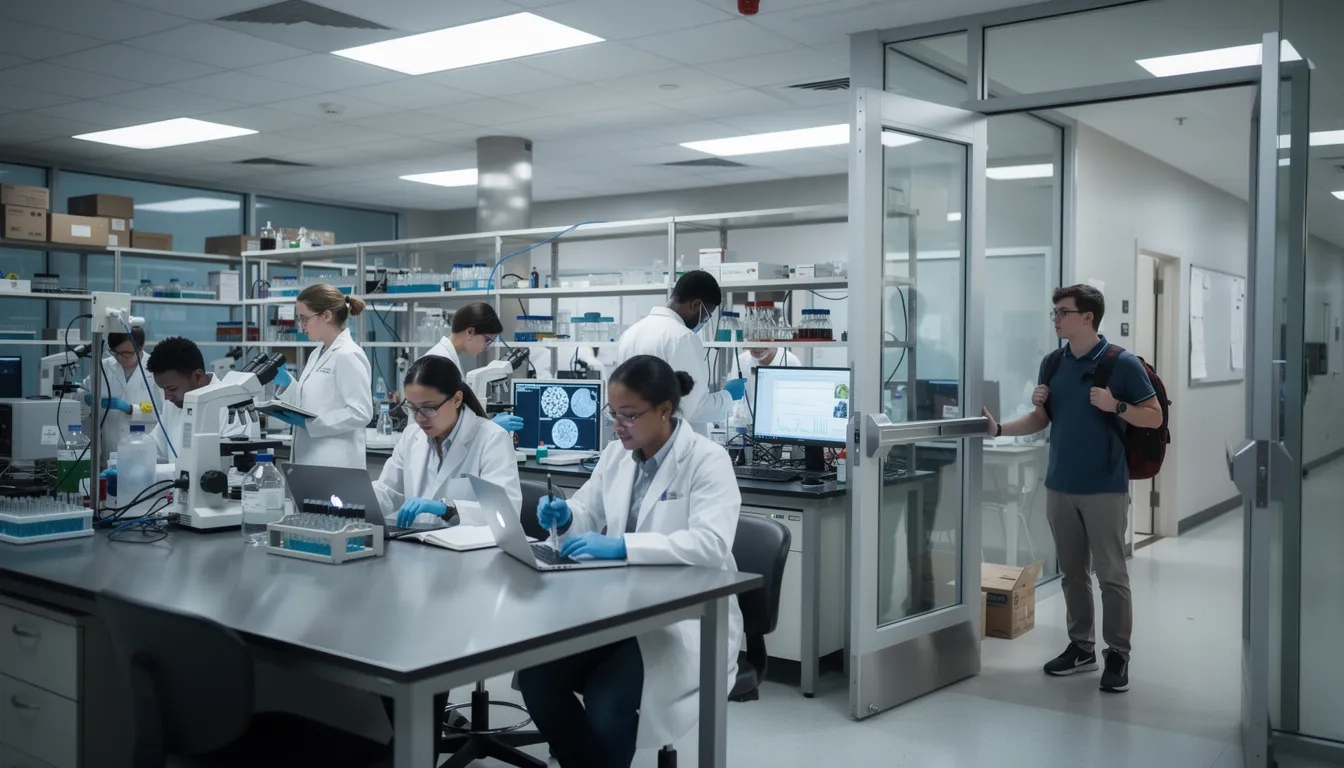
Here's something that doesn't show up in any rankings brochure: in the 2024–2025 academic year, MIT's undergraduate research program paid out $16,861,624 to support students doing faculty research. Not grants for grad students. Not postdoc stipends. Money specifically allocated so undergraduates could get paid to think. That number matters because it signals something about institutional priorities that no prestige ranking can capture — whether a school has actually organized itself around giving undergrads access to real scientific work, or whether "research university" is just a descriptor on the tour guide's script.
Choosing a college for research is a different decision than choosing one for its reputation. The questions are more specific. Can first-years get into labs? Is there money to support summer work? Will you appear on a publication, or just run gel electrophoresis for three years and hope someone noticed?
What "Research University" Actually Means for Undergrads
A university can spend $3 billion a year on research and still leave undergraduates completely out of it. Graduate students and postdocs fill most lab positions at large research institutions, and many schools treat undergrads as convenient labor rather than developing scientists.
The metric that actually matters is undergraduate access — not total research spending. Three questions separate genuinely student-centered research cultures from schools that just have impressive NSF grant portfolios:
- Can freshmen and sophomores enter labs, or do you have to wait until junior year?
- Is there structured funding (stipends, fellowships, grants) or are students expected to work for free and "gain experience"?
- Do undergrads end up as co-authors on published research?
A school scoring well on all three is a categorically different place to spend four years than one that just posts large research expenditure numbers on its website.
The Programs That Defined the Field
MIT's Undergraduate Research Opportunities Program is the oldest of its kind in the country, launched in 1969. Dozens of universities have since built their own versions of it — which tells you something about how much the original model works. UROP lets students earn credit, receive a salary, or apply for independent grants to run their own projects. Faculty across every department participate. In the Class of 2025, 93% of MIT undergraduates participated in UROP before graduating. Even more striking: 73% of the incoming Class of 2028 participated in UROP during their very first academic year.
Caltech's SURF program (Summer Undergraduate Research Fellowships) works on a different model — and in some ways, a more rigorous one. Students write a formal research proposal that faculty review before any funding is approved, then spend 10 weeks over summer working full-time on the project. The proposal requirement sounds like an obstacle, but it's the actual point. Writing a proposal forces you to understand the existing literature before setting foot in the lab, which means you hit the ground running instead of spending four weeks figuring out what question you're even trying to answer. About 85% of Caltech undergrads engage in research during their time there, and 45% of the incoming Class of 2027 had already conducted research before they enrolled — a striking signal about the self-selection into Caltech's culture.
Princeton takes a different approach entirely. Rather than a voluntary program you have to seek out, Princeton requires every undergraduate to complete independent research. Every junior writes two independent research papers. Every senior writes a thesis. Full stop, no exceptions. Other schools offer honors thesis programs for students who want them. Princeton made the decision that every graduate should have done extended independent work — which is a statement about what Princeton thinks education is for.
Johns Hopkins spends more on research than any other American university, at $3.66 billion annually according to Washington Monthly's 2025 analysis. That scale matters for undergrads because labs are running year-round with real funding, there's almost always a project actively in progress, and the Provost's Undergraduate Research Awards provide direct project funding accessible to students at any year level. More than 80% of JHU students participate in research before graduating.
Budget vs. Access: What the Numbers Actually Tell You
| School | Annual Research Spending | Undergrad Participation | Key Program |
|---|---|---|---|
| Johns Hopkins | $3.66B | 80%+ | Provost's Undergraduate Research Awards |
| MIT | ~$2B | 93% of seniors | UROP (est. 1969) |
| Stanford | ~$1.9B | Very high | Bio-X, VPUE grants |
| Northwestern | $900M | High | Annual Undergraduate Research Expo |
| U. Michigan | High | 1,300+ first/second-years per year | UROP (equity-focused) |
| Caltech | Moderate | 85%+ | SURF (proposal-based) |
| Princeton | Moderate | 100% (required) | Senior thesis, junior papers |
The table reveals a tension worth sitting with. Johns Hopkins leads on raw spending by a large margin, but Princeton achieves 100% participation by making research mandatory rather than optional. Both approaches produce undergraduate researchers. They just produce different kinds of researchers.
University of Michigan's UROP deliberately connects over 1,300 first- and second-year students to research projects each year, with an explicit institutional priority on first-generation and underrepresented students. That's a structural decision about who gets early access to academic science, and it's meaningfully different from programs where you network your way in by cold-emailing professors and hoping someone responds.
The best research environment for you is not the one with the most Nobel laureates on faculty. It's the one where a sophomore can walk into a lab and be treated as someone worth teaching.
Schools the Rankings Undersell
The usual names dominate every list. But a few schools punch above their reputation specifically for undergraduate research culture, and they rarely get the credit.
University of Chicago embeds research methodology across all disciplines through its Core Curriculum (an unusual move for a research university, where methods training is usually siloed into department-specific courses). The Metcalf Internship Program and College Research Fellows program both fund substantive independent projects. The University of Chicago also runs the Midway Science Initiative — a less-publicized program that gives undergrads access to faculty across social science, physical science, and the humanities in the same research cohort.
Duke's Bass Connections is genuinely different from anything most schools offer. Instead of the typical model where a student joins an existing faculty project, Bass Connections builds interdisciplinary teams around specific real-world problems: AI in healthcare, water security in sub-Saharan Africa, misinformation and democracy. Students from different departments work alongside faculty, graduate students, and external partners on problems that don't belong to any single discipline. Travel grants let students present the work at conferences. Long-term involvement over multiple semesters is baked in, not an afterthought.
Williams College (a liberal arts school, not a research university in the traditional sense) consistently places a higher percentage of its graduates into top PhD programs than schools with ten times its research budget. The reason isn't prestige or funding — it's that Williams professors aren't competing with graduate students for their own attention. A Williams student doing a yearlong research project gets genuine 1-on-1 mentorship. That's harder to find at MIT than the brochure suggests.
Research as an Admissions Strategy
This is where the numbers get specific enough to pay attention to. At Stanford, students who participate in the RISE (Research in Science and Engineering) program are admitted at an 18% rate — compared to Stanford's overall 3.7% rate. That differential isn't because RISE students are uniformly smarter. It's because documented research experience signals exactly what selective admissions committees want to see: intellectual initiative, the ability to tolerate ambiguity, and evidence of sustained independent work on an open-ended problem.
The pattern holds at Penn. Nearly one-third of Penn's admitted Class of 2026 had conducted independent research before applying, and Penn RISE scholars achieved a 32% acceptance rate against Penn's 5.9% overall figure.
For graduate and medical school admissions, the advantage is even more direct. A letter from a faculty member who supervised your research for two semesters tells a PhD admissions committee something that a letter from a professor who knew you as one of 220 students in a lecture hall simply cannot convey.
The practical implication: starting to seek out research in your freshman or sophomore year isn't just about building skills. It's about building the kind of relationship with a faculty member that produces a letter worth reading.
How to Match Yourself to the Right Research Culture
This is — I think — the most underrated part of the college research decision. Most students ask "which school has research?" when they should ask "which type of research environment fits how I actually work?"
If you want guaranteed, structured involvement: Princeton (mandatory thesis), MIT's UROP (large enough that something almost always fits), or Michigan's UROP (which actively recruits first-years) are your best options. You don't have to cold-email your way in.
If you want the experience of writing a real grant proposal: Caltech's SURF model is the closest approximation of what academic science actually feels like. Writing a research proposal at 19 is uncomfortable. It also turns out to be the single most useful skill for anyone who wants to go on in science or research-intensive industry.
If you want work that crosses disciplines: Duke's Bass Connections or Stanford's Bio-X program are designed for students who want to work at the intersection of, say, computational biology and public health policy — problems that don't fit neatly inside a single department.
If you want depth over scale: Williams, Amherst, Swarthmore, and Harvey Mudd all place undergraduate researchers in environments where they're treated as genuine intellectual contributors. The facilities may not match what you'd find at a major research university. The mentorship often exceeds it.
One thing I'd caution against: choosing a school primarily for research prestige when the academic fit is otherwise wrong. A student who thrives in small discussion seminars won't do their best work sitting in a 400-person lecture hall, regardless of how many papers the professor beside them has published.
Bottom Line
- Access beats prestige. The right research school is the one that puts you in a lab as a first-year with funding, not the one with the most impressive press releases.
- Look for named, funded programs. UROP, SURF, Bass Connections, and the Provost's Undergraduate Research Awards are structured and real. "We value research" is not a program.
- Mandatory vs. optional cultures are different things. Princeton's universal thesis requirement means every graduate has done independent research. That's a fundamentally different outcome from a school where research exists but is rare.
- Start earlier than feels comfortable. Students who begin seeking faculty research connections in freshman year have time to build the kind of supervisory relationship that generates meaningful letters of recommendation. Waiting until junior year doesn't.
- Match the structure to your working style. The most productive undergraduate researchers are the ones who found an environment that fit them, not just a name-brand institution.
Frequently Asked Questions
Can first-year students actually get into research labs, or is that just marketing?
At MIT, the University of Michigan's UROP, and Johns Hopkins, first-year access is explicitly built into the program design — it's not a happy accident. At most large public universities, though, the realistic starting point is sophomore year, and you usually have to initiate the contact yourself. Programs like Michigan's UROP are notable precisely because they actively recruit first- and second-year students, removing the "you have to already know how this works" barrier.
Is research experience required for medical school?
Not formally. But it has become a practical expectation at competitive MD programs. Most successful applicants to top schools have at least one sustained research experience and, ideally, a faculty letter from someone who supervised that work. Clinical volunteering and research are both expected; lacking either is a meaningful gap in your application.
Does research at a small liberal arts college count the same as research at a major research university?
Yes — and in some contexts, more. Medical and PhD admissions committees know that a student doing a yearlong independent project at Swarthmore or Williams was genuinely doing the intellectual work, not shadowing a graduate student at a busy lab bench. Depth of involvement and quality of mentorship matter more than the letterhead on your reference letter.
What's an REU, and should I apply for one?
Research Experience for Undergraduates (REU) programs are NSF-funded summer positions where students conduct research at a university they don't attend. Stipends typically run around $6,000 for the summer, plus housing. They're open to students from any institution and are especially valuable if your home school doesn't have strong research infrastructure in your area of interest. Applying in sophomore year is the smartest timeline — REUs are competitive, and applying twice is better than applying once as a senior.
Is it a myth that you need an Ivy League school for meaningful undergraduate research?
Largely, yes. Some of the most productive undergraduate researchers in the country come from schools like Harvey Mudd, Case Western Reserve, Purdue, and UC Santa Barbara — institutions with serious research programs, lower student-to-faculty ratios than some elite privates, and faculty who genuinely want to work with undergrads because they don't have PhD students competing for their time. What matters most is whether you pursue the opportunity, whether the faculty are available, and whether the program has real funding behind it.
Sources
- Best Undergraduate Research Universities in the U.S. for 2025 — Kollegio
- 50 Best Research Universities Ranked for Undergrads — Academic Influence
- 15 US Universities with the Strongest Undergraduate Research Culture — Rise Global Education
- The Top 20 Best Research Schools in the U.S. — Poets & Quants for Undergrads
- About UROP — MIT Undergraduate Research Opportunities Program